
Have we completed the circle – Are ATB’s the new gravel ?Back in the mid-eighties I bought my first mountain bike – a Raleigh Montage. Way back then mountain bikes were still finding their way and had a bit of an identity crisis, partially due to the lack of proper mountains in many parts of the world and they were occasionally called all terrain bikes or ATB’s. The French still use the term VTT or Vélo Tout Terrain to describe them.
Back then mountain bikes were rather crude affairs. The geometry and frame were very similar to a hybrid bike, there was no suspension and the brakes were cantilever brakes which were popular on touring bikes at the time. The tyres were a tad chunkier than on a racing bike with 1.75” width if you were lucky.
Fast forward around 20 years and the likes of Specialized brought do it all models such as out the Tricross. It was a bit longer and more relaxed than a cyclocross bike and you could fit wider tyres. This slowly evolved into gravel bikes as we know it with disc brakes being borrowed from MTB’s, 1x drivetrains and wider tyres.
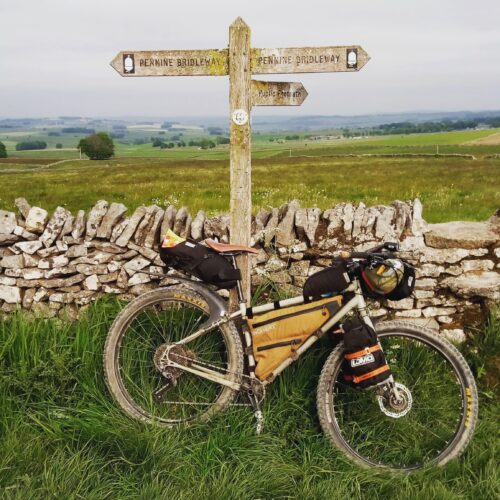
Meanwhile in the background brands such as Salsa and Surly were developing bikes in the background which were MTB’s with rigid forks for the bikepacking market which at the time was quite a niche pastime. Think of the SUV of the bike world, think of the original ATB with slacker angles, bigger tyres and better brakes..
We’re now at a stage where many gravel bikes have the capacity to take wider tyres that are a lot chunkier than the original mountain bikes. I think this is not only driven by marketing and the need to sell more bikes but riders are pushing the boundaries of where they want to take their bikes, finding many trails a bit tame for their liking.
Here’s the bit where I take a punt at the future and stick my neck out. I think that the market share of ATB’s will grow exponentially. They are slower on the road than a gravel bike, but many riders try and avoid roads. They have a rugged image that will appeal to a certain kind of rider and they have the potential to allow you to explore more. With the lack of suspension they are simpler to maintain than a MTB and many are designed to carry bikepacking luggage with additional mounting points.
Being a bit of a geek and sometime early adopter I thought I’d ask ChatGPT for it’s take on it. Here’s the answer after I told it what ATB stood for:
“Ah, I see. Thank you for clarifying. Yes, “ATB” stands for All Terrain Bike, which typically refers to a bicycle designed to handle various off-road terrains. On the other hand, “gravel bikes” are designed specifically for riding on unpaved gravel roads or mixed terrains.
While there are similarities between ATBs and gravel bikes in terms of their ability to handle diverse terrain, they are not necessarily the same. Gravel bikes are specifically optimized for gravel riding, with features such as wider tires, more relaxed geometry, and additional clearance for mud and debris. They often have drop handlebars like road bikes, but with more stability and comfort for off-road riding.
ATBs, on the other hand, are designed for a broader range of off-road terrains, including mountain biking trails. They typically have knobby tires, suspension systems (either front suspension or full suspension), and more aggressive geometries for tackling rough trails and technical obstacles.
While some riders may choose to use ATBs for gravel riding, the term “gravel bike” has gained popularity to describe a specific type of bicycle optimized for gravel roads and mixed-surface adventures. Gravel bikes offer a balance of speed, comfort, and versatility, making them well-suited for long-distance gravel rides, bikepacking, and exploring unpaved routes.
Ultimately, whether ATBs can be considered the “new” gravel bike depends on the specific context and how people are using the term. Gravel bikes have gained a dedicated following and continue to evolve with specialized features, so they remain a distinct category within the cycling world”.
It does feel to an extent as though we have gone the full circle with the ride of the ATB.


You must be logged in to post a comment.